

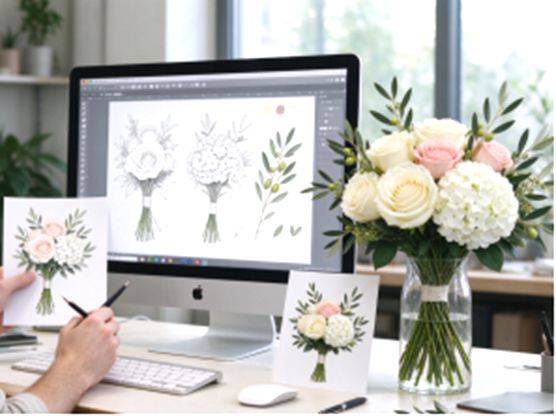
If you are sourcing artificial flowers, you will inevitably hear the terms OEM and ODM. Understanding the difference is crucial for your business strategy, as it affects your costs, lead times, and brand identity.
OEM (Original Equipment Manufacturer):
In this model, you provide the design, specifications, and sometimes even the materials. The factory simply manufactures the product according to your exact instructions and puts your logo on it.
- Pros: You own the design. You can create a unique product that competitors cannot copy.
- Cons: High minimum order quantities (MOQ). High development costs. Long lead times.
ODM (Original Design Manufacturer):
In this model, the factory already has a catalog of designs. You simply choose an existing design, and they print your logo on the packaging or the product.
- Pros: Low MOQ. Fast lead times. Lower costs. You can test the market quickly.
- Cons: No exclusivity. Your competitors can buy the exact same flowers from the same factory.
| Comparison Items | OEM | ODM |
| Cost | High upfront development cost, lower unit cost for large volume orders | Low upfront investment, slightly higher unit cost |
| MOQ | Higher | Lower |
| Uniqueness | High, exclusive custom designed products | Medium, modifications based on factory existing styles |
Which one is right for you?
If you are a startup or a small retailer, start with ODM. Test what sells. Once you have a best-seller, transition to OEM to build a moat around your brand. If you are a large hotel chain or a established brand, OEM is the way to go to ensure your decor matches your brand guidelines perfectly.